
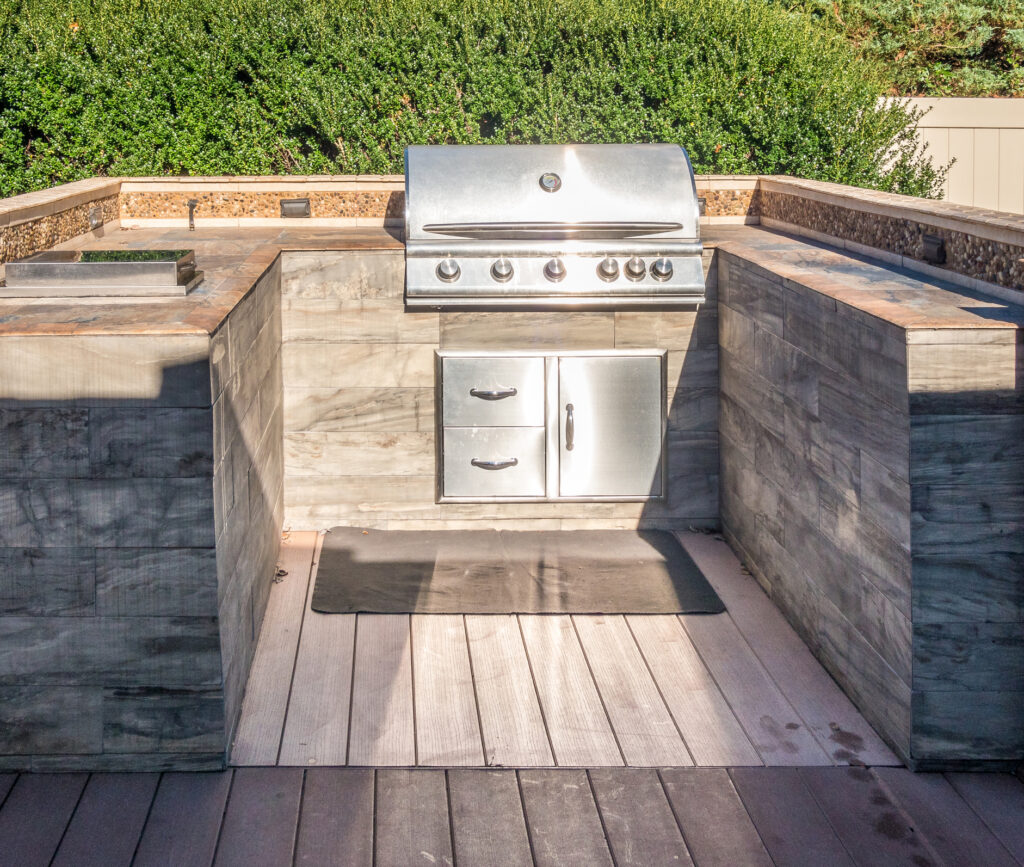
Granite has become a popular choice not just for kitchen countertops, but for outdoor kitchens, patio surfaces, pool decks, and entryway steps. It holds up well against the elements, but outdoor granite faces a different set of challenges than the granite inside your home. Sun exposure, rain, freezing temperatures, and everyday debris all take a toll over time. Understanding how to properly care for outdoor granite can help you protect your investment and keep it looking beautiful for years to come.
Why Outdoor Granite Wears Differently Than Indoor Granite
Indoor granite surfaces are shielded from rain, wind, and direct sunlight, but outdoor granite has no such protection. Constant exposure to UV rays can gradually dull the finish, while repeated cycles of rain and drying can wear down even a well-applied sealant faster than expected. In colder climates, water that seeps into tiny pores and then freezes can expand and cause cracking. This is why outdoor granite typically needs more frequent attention than the granite in your kitchen.
Common Issues Facing Outdoor Granite Surfaces
Outdoor granite is exposed to a wider range of wear and tear than indoor surfaces, and the most common issues include:
- Fading or dulling caused by prolonged sun exposure
- Sealant breakdown from repeated rain and moisture cycles
- Cracking or pitting from freeze and thaw cycles in cooler climates
- Staining from leaves, dirt, and other organic debris
- Buildup of grime in areas near pools, grills, or high foot traffic
How Professional Sealing Helps Outdoor Granite Last Longer
A penetrating sealant is especially important for outdoor granite because it helps prevent water absorption that can lead to staining and, in freezing climates, cracking. At Fuller Granite Repair, we use sealing products designed to hold up under sun and rain exposure, and our technicians know how often outdoor surfaces typically need resealing based on your local climate. In many cases, outdoor granite needs to be resealed more often than indoor surfaces, sometimes annually rather than every one to two years.
Cleaning Outdoor Granite the Right Way
Outdoor granite tends to collect more dirt, pollen, leaves, and other organic material than indoor surfaces. Left unaddressed, this debris can create staining or provide a foothold for mold and mildew, especially in shaded or humid areas. Rinsing outdoor granite regularly with water and using a pH-neutral cleaner helps prevent buildup without damaging the stone. Avoid pressure washers set too high, as excessive pressure can wear down the sealant faster than normal weathering would.
Signs Your Outdoor Granite Needs Professional Attention
Outdoor surfaces can wear down gradually, so it helps to know what to watch for. If water no longer beads on the surface of your outdoor granite, that is often a sign the sealant has worn away and needs to be reapplied. Discoloration, rough or pitted spots, and visible cracks are all signs that professional restoration may be needed. Because outdoor granite faces more exposure than indoor surfaces, it is worth having it inspected periodically, even if it still looks fine at first glance.
Protect Your Outdoor Investment
Outdoor granite can be a stunning addition to a patio, outdoor kitchen, or entryway, but it requires a maintenance approach suited to its environment. With the right sealing schedule and cleaning routine, your outdoor granite surfaces can stay durable and beautiful despite constant exposure to the elements.
If you have outdoor granite that needs sealing, cleaning, or restoration, Fuller Granite Repair is here to help. Call us today at 855-289-1738 for a free quote and let our team keep your outdoor surfaces protected all year round.